
Think Change Forum, a leading independent think tank based in New Delhi, in partnership with Delhi Research Implementation and Innovation (DRIIV), Office of the Principal Scientific Adviser to the Government of India, as Knowledge Partner, today organised a national seminar bringing together leading energy experts, policymakers, innovators, public-sector enterprises, industry leaders, financiers and clean-energy stakeholders to discuss India’s new-energy transition and the urgent need to move from evaluation to adoption.
The seminar, themed “New Energy: From Evaluation to Adoption,” sought to shift the national conversation from creating clean-energy capacity to ensuring that this capacity can be reliably transmitted, stored, purchased and productively used. The discussions examined how India can translate its expanding clean-energy base into greater energy security, affordability, industrial competitiveness and resilience.
Experts noted that India has built a formidable foundation for this transition. As of 31 March 2026, the country had installed 283.46 GW of non-fossil-fuel capacity, including 274.68 GW of renewable energy, and ranked third globally in installed renewable-energy capacity. India also added a record 55.29 GW of non-fossil capacity during FY2025–26.
However, experts stressed that installed capacity alone cannot deliver the energy transition. The next and more difficult phase will be to absorb variable renewable power into the grid, move it efficiently from generation centres to consumers, create dependable procurement mechanisms and enable industry, infrastructure, mobility, buildings, households and public institutions to adopt cleaner energy at scale.
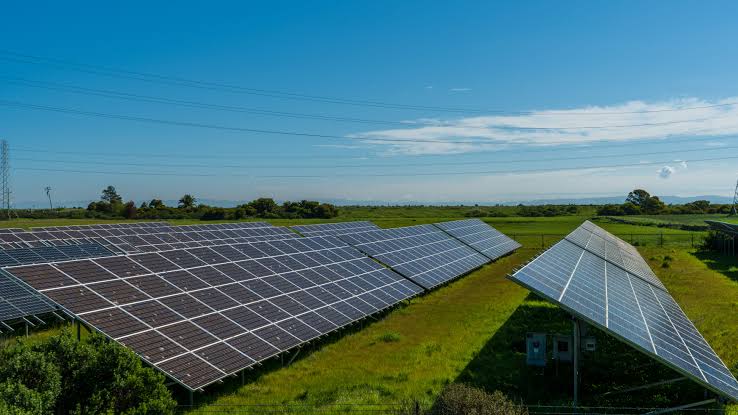
The scale of the integration challenge is already visible. During April–June 2026, approximately 8,133 GWh of solar electricity was curtailed because of transmission constraints and grid-security requirements. At the same time, the Central Electricity Authority estimates that India will require approximately 336 GWh of energy-storage capacity by 2029–30 and 411 GWh by 2031–32 to integrate renewable power reliably and maintain grid stability.
The seminar was held at the India International Centre, New Delhi, and featured key voices from India’s energy and sustainability ecosystem, including Dr Ajay Mathur, Former Director General, International Solar Alliance and Former Director General, Bureau of Energy Efficiency; Shri Upendra Tripathy, Retd. IAS, Advisor (Climate Change) to Hon CM of Karnataka and Climate Ambassador of the State of Karnataka, Former Secretary MNRE; Shri A.K. Saxena, Senior Director, TERI; Shri Jiwesh Nandan, Retd. IAS, Distinguished Fellow, TERI and Founding CEO, EESL; Shri J.S. Chandok, CEO, ONGPL; Dr Vishal Choudhary, Scientist F, Office of the Principal Scientific Adviser to the Government of India; Dr Srikanta K. Panigrahi, DG, Indian Institute of Sustainable Development; and Shri Raj Singh Niranjan, Managing Partner, Trans India Law Associates.
Delivering the opening keynote, Dr Ajay Mathur, Former Director General, International Solar Alliance and Former Director General, Bureau of Energy Efficiency, said: “The real question is how we adopt clean energy technologies at scale, reliably and affordably. Our strategic focus must rest on five areas. First, energy efficiency, it remains the lowest-cost, most immediate lever we have. Second, shifting our sources of electricity, since solar and wind with storage are now cheaper than new coal power, which means our focus must turn to land, transmission and capital for these plants. Third, enhancing electrification, of cooking, of mobility, to reduce our dependence on imported oil. Fourth, providing realistic decarbonisation pathways for legacy, energy-intensive sectors like cement, steel and fertilisers, where green hydrogen can play a critical role. And fifth, as we move from evaluation to adoption, new technologies will keep emerging that need that same evaluation. India’s new energy future will be shaped not only by the technologies we develop, but by how effectively these are adopted, financed, and scaled. This is where ambition needs execution.”
Experts highlighted that the next phase of India’s energy transition will depend not only on the availability of technology or the ambition of public policy, but also on financing, buyer confidence, procurement pathways, transmission availability, storage, flexible demand and commercially sustainable business models.
In his keynote address, Shri Upendra Tripathy, Retd. IAS, Advisor (Climate Change) to Hon CM of Karnataka and Climate Ambassador of the State of Karnataka, Former Secretary MNRE, underlined the importance of practical and commercially viable transition pathways for legacy and energy-intensive sectors: “This conversation is coming at the right time, given the range of challenges we’ve seen globally in recent times. These challenges are not uni-directional, they play out at every level, global, national, and state, and each requires its own solution. There is no single fix that works for all of them. What gives me confidence, though, is how much has already being figured out on the ground, and we now need to take it to execution and implementation.”
Speaking on the need to strengthen India’s new-energy adoption ecosystem, Shri A.K. Saxena, Senior Director, TERI, said: “New energy solutions have been emerging and will continue to emerge, driven both by technology push and by demand pull. But to reap the full benefit of any new technology, we need to examine it through a common set of lenses: policy, regulations, standards, workforce and capacity building, financing and business models. We have seen this play out before, with LEDs and with solar power. As a technology matures and scale builds in India, costs come down to a point where what looks expensive today becomes viable tomorrow.”
The discussions also focused on the role of science, technology and institutional collaboration in accelerating clean-energy adoption. Experts emphasised that promising technologies must move beyond pilots and demonstrations into dependable, replicable and commercially viable deployment models.
Dr Vishal Choudhary, Scientist F, Office of the Principal Scientific Adviser to the Government of India, underlined the need to connect innovation, research, policy and implementation, and said: “A major concern is breaking down silos. Only when research, academia, industry, startups and government come on a single platform can we close the gap between technology validation and industry adoption. One successful step in this direction has been the establishment of Science and Technology Clusters. These clusters don’t stop at identifying the problem; they’re expected to close the loop by delivering a solution that industry or local authorities can actually adopt and implement on the ground.”
Experts including Shri Upendra Tripathy, Retd. IAS, Advisor (Climate Change) to Hon CM of Karnataka and Climate Ambassador of the State of Karnataka, Former Secretary MNRE; Ms Disha Agarwal, Fellow, CEEW; Mr Sandeep Kanda, Consultant, World Bank; Ms Rupal Jain, Technology Policy, Reliance Industries Ltd.; and Shri Vishwas Surange, CEO & Executive Director, Powerlinks Transmission Ltd., discussed practical pathways for improving grid and transmission efficiency, introducing cleaner industrial processes, strengthening smart-energy management, meeting growing data-centre demand and enabling commercially viable decarbonisation by legacy and energy-intensive businesses.
There was broad consensus that India’s clean-energy opportunity can only be realised through faster and more structured coordination among policymakers, financiers, technology providers, power utilities, industrial users and institutional buyers.
Experts identified four priority areas for action:
- Align policy, finance, technology and demand: Create coordinated pathways connecting innovation and capacity creation with identifiable buyers and end users.
- Build bankable adoption models: Develop clear procurement routes, risk-sharing mechanisms, demonstration platforms and commercially replicable business models.
- Accelerate transmission and storage: Ensure that grid, evacuation and storage infrastructure is commissioned in step with renewable-generation capacity.
- Strengthen domestic value chains: Link clean-energy deployment with domestic manufacturing, skills, research and supply-chain development to improve India’s long-term energy resilience.